Where Did Mars’ Thick Clays Come From?
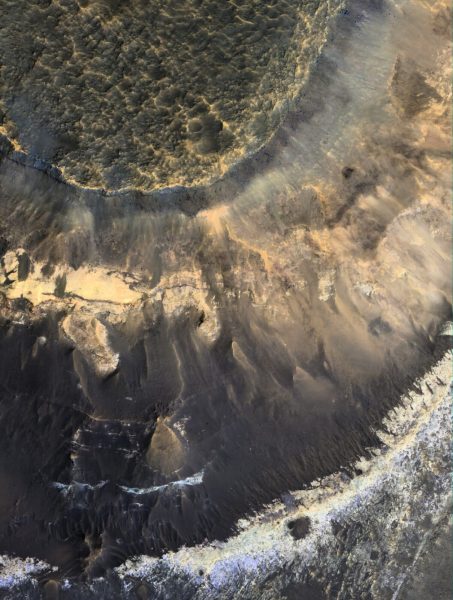
Mars is home to thick layers of clay that can span hundreds of feet deep. Since they need water to form, these outcrops have long been of interest to scientists looking for signs of past life on the red planet.
Researchers took a close look at these clay terrains and found that most formed near standing bodies of surface water, which were common on Mars billions of years ago. This environment would help foster the chemical weathering needed to create thick, mineral-rich layers of clay and could have provided the right mix of water and minerals needed for life.
The researchers noted that the thick clays could also be a sign of an imbalanced water and carbon cycle on ancient Mars, which could explain why Mars appears to be missing carbonate rocks in environments where they would be expected on Earth.
These thick clay layers formed during Mars’ wet period billions of years ago, when the planet was covered in lakes and rivers. However, before this study, little was known about the environments in which the clay layers formed and how the surrounding terrain influenced their evolution.
Research by Rhianna Moore, postdoctoral fellow (2023–2025); Tim Goudge, associate professor
Department of Earth and Planetary Sciences; Center for Planetary Systems Habitability
Research published June 2025 in Nature Astronomy