Uncovering the Hidden Drivers of Wildfires
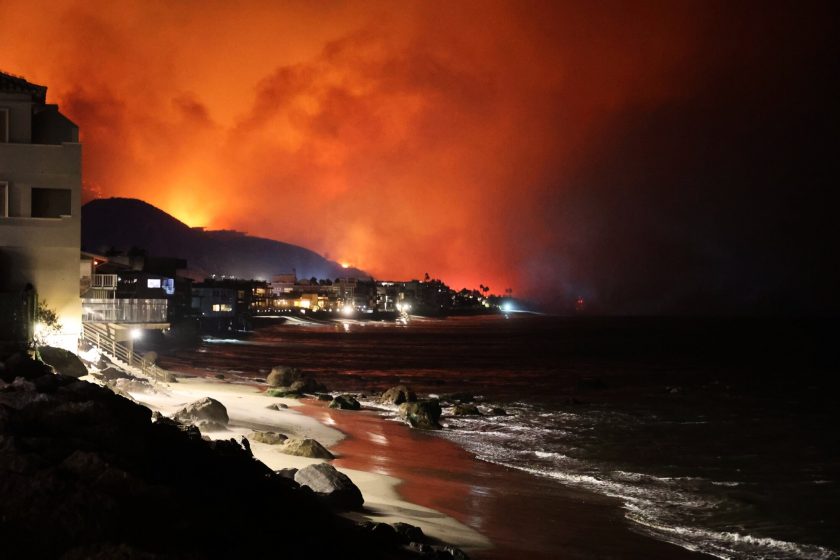
A new approach for estimating wildfire risks along the Pacific Coast and Four Corners area of the western U.S. has found that relative humidity is as important as temperature for driving wildfires. It also shows that extreme fires are expected to be more widespread in the future, and to happen at the same time in the Pacific Coast and the Four Corners region.
Extreme wildfire risk is conventionally forecast by looking at the Canadian Fire Weather Index, which has tracked wildfire risk since 1980. The index calculates the risk scores based on temperature, relative humidity, wind speed and rain data.
This method is useful for comparing how climate conditions have changed over time. However, it considers climate variability as part of the “noise” of the climate system and leads to the underestimation of the impact of human activity, both positive and negative, on wildfire risk.
Instead of discarding climate variability, Touma’s new approach embraces it. It compares climate conditions on an annual basis or over shorter decadal time frames. These time scales help climatologists drill into climate phenomena that could be driving wildfire risks that aren’t just rising temperatures.
This approach gives scientists a better understanding of how climate extremes influence extreme fire events, and it can help with wildfire prevention and resilience.
Research by Danielle Touma, research assistant professor
Institute for Geophysics
Research published June 2026 in Journal of Climate