Artemis Astronauts Have UT Geology Roots
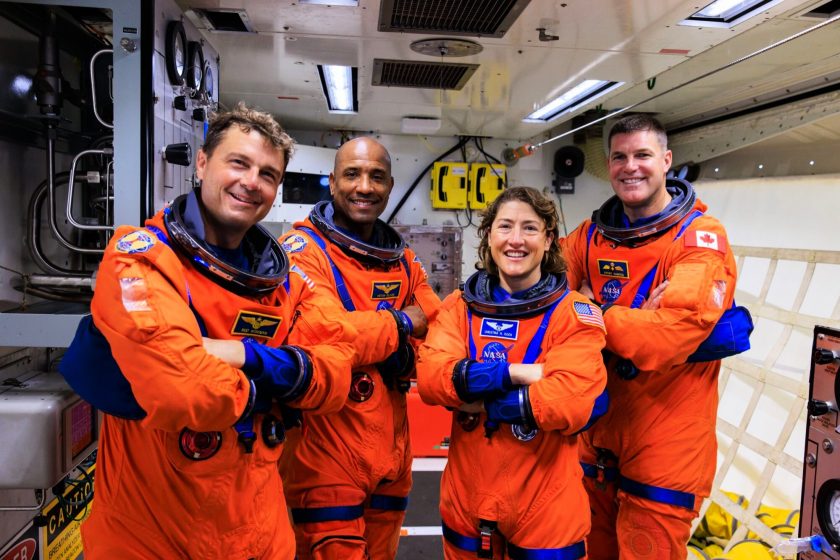
Years before they captured the world’s imagination with their historic space flight and pictures of the Earthrise over the far side of the moon, the crew of the Artemis II mission were trained in field geology by a professor who put generations of Longhorn geologists through their paces.
Mark Helper, now an emeritus distinguished senior lecturer at the Jackson School of Geosciences, helped train every new class of NASA astronaut hopefuls since 2009, including all four of the moon-faring Artemis II astronauts: Commander Reid Wiseman, pilot Victor Glover, and mission specialists Christina Koch and Jeremy Hansen.
While the geosciences might not necessarily jump to the front of people’s minds when discussing space missions, exploring moons and planets involves geology at a fundamental level.
Helper said he felt a sense of immense pride watching the Artemis II flyby in April and listening to his former NASA students put some of the skills they learned in the field to work while observing the moon.
“I was a bit like a proud parent listening to Victor and Reid talking about and describing what they were seeing,” he said. “To have your very best students and see them being successful — based a little bit on what you’ve taught them — that’s incredibly satisfying.”
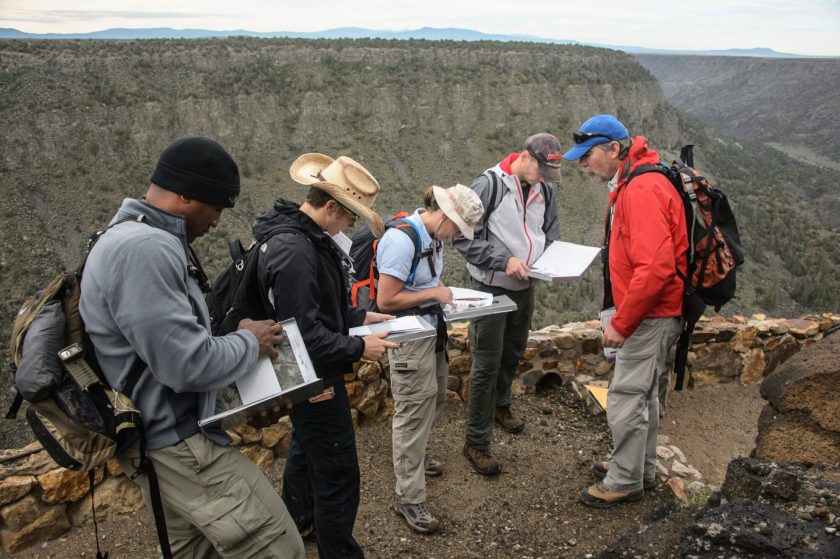
Helper, who led the UT geology field camp for 37 years, designed and taught the five-day field exercises that astronaut recruits were required to take. The field work, which comes after a week in the classroom of learning geology basics, took place along the upper Rio Grande, outside Taos, near the tiny town of Questa, New Mexico. It involved many of the same geologic mapping and field data collection exercises that Jackson School undergraduates tackle during the school’s flagship field camp.